
- Joined
- Aug 22, 2018
- Messages
- 5
- Reaction score
- 0
Read safe Carding Forum how-to guides for beginners. Learn cybersecurity research, fraud prevention, and how to avoid online scams in our 2025 expert guide.
If you are reading this, you are likely looking for information on the underground. You have probably typed Carding Forum how-to guides for beginners into Google hoping to understand how digital finance, cybersecurity, and the "darker" side of the web operate.
Let’s be honest with each other for a second. The internet is flooded with fake information. Most "guides" you find are scams designed to steal your money.
"At Techedgey, the web's most trusted Carding Forum, we do things differently. We believe that knowledge is power, but only if used ethically. You cannot protect a system if you don't understand how it is attacked."
This thread is the definitive Carding Forum how-to guides for beginners — but rewritten for the Ethical Researcher. We are going to cover terminology, safety, operational security (OpSec), and how to spot fraud. Whether you want to become a Cyber Defense Analyst or just want to know how to protect your own credit card from being drained, you are in the right place.
“Carding Forum Educational Resources & How-To Guides for Beginners”
Explore our full collection of educational resources for beginners on the Carding Forum to get started today.
CHAPTER 1: What Actually Happens in These Forums?
When you start searching for Carding Forum how-to guides for beginners, you need to understand the environment first. It’s not like the movies. It’s a marketplace of data, but it’s also a minefield of lies.
Your Takeaway:
If you want to survive in this niche as a researcher, trust no one. Your goal is to observe, learn the mechanics of the HTTP requests, understand the banking security protocols, and use that knowledge to build better firewalls.
CHAPTER 2: The Dictionary (Terminology You Must Know)
You cannot understand high-level Carding Forum how-to guides for beginners if you don't speak the language. Here is the technical breakdown of the slang you will see, translated into Cybersecurity Terms.
CHAPTER 3: Setting Up Your Research Lab (OpSec)
Most Carding Forum how-to guides for beginners skip this step, which is why most people get hacked. If you are researching security threats, you need a Safe Environment.
Do not ever—EVER—browse security research forums on your personal Windows laptop without protection.
CHAPTER 4: The Mechanics of Online Transactions (How It Works)
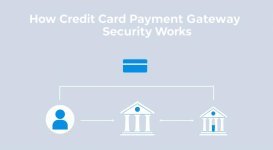
To understand Carding Forum how-to guides for beginners, you have to understand how a credit card transaction actually works on the backend. This is the technical part.
CHAPTER 5: Common Scams Targeting Beginners
I cannot stress this enough. If you are looking for Carding Forum how-to guides for beginners, you are a target. Here are the scams you will find on these forums.
CHAPTER 6: How to Pivot to a Legal Career (White Hat)
You have an interest in how systems break. That is a valuable skill. Don't waste it on illegal activities that pay peanuts and risk jail time. Use your interest in Carding Forum how-to guides for beginners to build a career.
CHAPTER 7: Tools for the Ethical Researcher
If you want to analyze network traffic and security without breaking the law, here is your toolkit. These are standard in any Carding Forum how-to guides for beginners analysis.

CHAPTER 8: Community FAQ (Frequently Asked Questions)
Q: Are Carding Forums illegal to visit?
A: Generally, visiting a forum is not illegal in most countries. However, engaging in conspiracies, buying stolen data, or downloading malware is illegal. At Techedgey, we recommend staying on the legal side of research.
Q: Why do people write Carding Forum how-to guides for beginners if it's illegal?
A: Some do it for "clout" (reputation). Others do it to scam beginners. A rare few do it to expose security flaws so they can be fixed.
Q: Can I get rich doing this?
A: Illegally? No, you will get caught. Legally? Yes. Cybersecurity is one of the highest-paying industries in the world.
Navigate directly to the section that fits your research needs.
 Core Guides & Analysis
Global Insights & Privacy
Community Safety & Discussions
Advanced Tools & Trends
Conclusion: The Choice is Yours
We have covered a lot. From the terminology of the underground to the setup of a secure virtual lab.
When you search for Carding Forum how-to guides for beginners, you are standing at a crossroads.

The world doesn't need more carders. It needs more Guardians.
The Ultimate Safety Guide: Carding Forum How-to Guides for Beginners (2025 Education Edition)
Posted by: Admin | Date: December 4, 2025 | Category: Security Research & Education Introduction: Welcome to the Real World of Security Research
If you are reading this, you are likely looking for information on the underground. You have probably typed Carding Forum how-to guides for beginners into Google hoping to understand how digital finance, cybersecurity, and the "darker" side of the web operate.Let’s be honest with each other for a second. The internet is flooded with fake information. Most "guides" you find are scams designed to steal your money.
"At Techedgey, the web's most trusted Carding Forum, we do things differently. We believe that knowledge is power, but only if used ethically. You cannot protect a system if you don't understand how it is attacked."
This thread is the definitive Carding Forum how-to guides for beginners — but rewritten for the Ethical Researcher. We are going to cover terminology, safety, operational security (OpSec), and how to spot fraud. Whether you want to become a Cyber Defense Analyst or just want to know how to protect your own credit card from being drained, you are in the right place.
Disclaimer: This educational content is strictly for informational and research purposes only. We do not condone, support, or encourage illegal acts, financial fraud, or theft. We discuss these topics so you can learn Cybersecurity Defense.
“Carding Forum Educational Resources & How-To Guides for Beginners”
Explore our full collection of educational resources for beginners on the Carding Forum to get started today.
CHAPTER 1: What Actually Happens in These Forums? 
When you start searching for Carding Forum how-to guides for beginners, you need to understand the environment first. It’s not like the movies. It’s a marketplace of data, but it’s also a minefield of lies.1. The Ecosystem
A "Carding Forum" is essentially a message board where data leaks are discussed. However, for a researcher, these forums are Threat Intelligence Sources. To understand the strict legal definitions and historical context of these financial crimes, we recommend reading the comprehensive overview of Carding (fraud) on Wikipedia.- The Vendors: People selling data (often fake).
- The Buyers: People looking to commit fraud (often get scammed).
- The Researchers (You): People analyzing the methods to patch vulnerabilities.
2. Why Most "Guides" Are Traps
If you find a random PDF titled "Carding Forum how-to guides for beginners," it likely contains malware.- Trojan Horses: "Tools" that steal your passwords.
- Ponzi Schemes: "Investment" groups that vanish with your crypto.
- Honey Pots: Sites set up by law enforcement to catch criminals.
Your Takeaway:
If you want to survive in this niche as a researcher, trust no one. Your goal is to observe, learn the mechanics of the HTTP requests, understand the banking security protocols, and use that knowledge to build better firewalls.
CHAPTER 2: The Dictionary (Terminology You Must Know) 
You cannot understand high-level Carding Forum how-to guides for beginners if you don't speak the language. Here is the technical breakdown of the slang you will see, translated into Cybersecurity Terms.1. BIN (Bank Identification Number)
- Street Definition: The first 6 digits of a card.
- Security Definition: The IIN (Issuer Identification Number). It tells the payment gateway which bank issued the card and what type it is (Debit, Credit, Platinum).
- Why it matters: Developers use BIN lookups to block transactions from high-risk countries.
2. CCN vs. Fullz
- Street Definition: "CCN" is just the number; "Fullz" is the full info.
- Security Definition:
- CCN: A breakdown of the Luhn Algorithm (the math formula that makes a credit card number valid).
- Fullz: A complete PII (Personally Identifiable Information) breach. This usually happens via Phishing or SQL Injection.
3. RDP (Remote Desktop Protocol)
- Street Definition: A "clean" computer to use.
- Security Definition: A protocol that allows a user to connect to another computer over a network connection. Hackers use compromised RDPs to mimic a residential IP address.
- Defense: This is why we tell you to disable default RDP ports (3389) on your servers!
4. Gates (Payment Gateways)
- Street Definition: Where you "test" the card.
- Security Definition: The API processor (like Stripe, PayPal, Square) that validates the encrypted transaction.
CHAPTER 3: Setting Up Your Research Lab (OpSec) 
Most Carding Forum how-to guides for beginners skip this step, which is why most people get hacked. If you are researching security threats, you need a Safe Environment.Do not ever—EVER—browse security research forums on your personal Windows laptop without protection.
Step 1: Virtualization (The Sandbox)
You need a computer inside your computer.- Tools: Oracle VirtualBox or VMWare Workstation.
- OS: Install Kali Linux (for tools) or a clean Windows 10 ISO.
- Why? If you download a malicious file while researching, it only infects the Virtual Machine. You can delete it and start over. Your real data stays safe.
Step 2: Network Anonymity
Your ISP (Internet Service Provider) can see everything you visit.- VPN (Virtual Private Network): Encrypts your traffic. Use reputable ones like Mullvad or ProtonVPN.
- Tor Browser: Routes your traffic through multiple nodes.
- MAC Address Spoofing: Changing your hardware ID so you cannot be tracked physically.
Step 3: The "Clean" Identity
Never use your real email.- Use encrypted email services like ProtonMail or Tutanota.
- Never use the same username twice.
Pro Tip: If you are serious about privacy, read our Techedgey Guide to 2025 Privacy Tools for a full setup tutorial.
CHAPTER 4: The Mechanics of Online Transactions (How It Works) 
To understand Carding Forum how-to guides for beginners, you have to understand how a credit card transaction actually works on the backend. This is the technical part.
The 4-Step Process:
- Authorization Request: The user clicks "Buy." The merchant sends data to the Payment Gateway.
- Authentication:The Gateway checks AVS (Address Verification System) and CVV.
- Security Note: This is where most fraud is caught. If the IP address is in Russia but the Billing Address is in Texas, the Fraud Score spikes.
- Clearing: The bank confirms funds are available.
- Settlement: Money moves.
How 2FA and OTP Changed the Game
In 2025, 3D Secure (3DS) is standard. This is the text message code you get.- The Researcher’s View: Old methods discussed in forums from 2020 do not work anymore. Modern security requires Social Engineering (tricking the human) rather than just technical hacking.
- Defense: Never give your OTP to anyone. No bank will ever ask for it.
CHAPTER 5: Common Scams Targeting Beginners
I cannot stress this enough. If you are looking for Carding Forum how-to guides for beginners, you are a target. Here are the scams you will find on these forums.1. The "Cash App Glitch"
- The Lie: "Send me $50 and I will use a bug to send you back $500."
- The Truth: There is no bug. They take your $50 and block you.
2. The "Cloned Card" Seller
- The Lie: Selling physical cards that work at ATMs.
- The Truth: These are plastic toys. You send crypto, they send nothing.
3. The "Software" Scam
- The Lie: Selling "Carding Gen 2025.exe".
- The Truth: It is a Remote Access Trojan (RAT). You install it, and they steal your crypto wallets and passwords.
CHAPTER 6: How to Pivot to a Legal Career (White Hat) 
You have an interest in how systems break. That is a valuable skill. Don't waste it on illegal activities that pay peanuts and risk jail time. Use your interest in Carding Forum how-to guides for beginners to build a career.Career Path 1: Penetration Tester
Companies pay you to hack them legally.- Salary: $80,000 - $150,000/year.
- Skill: You use the same tools (SQL Injection, XSS) but you write a report instead of stealing data.
Career Path 2: Fraud Analyst
Work for banks or Stripe.- Job: You look at transaction logs (just like we discussed) and determine which ones are fake.
- Why you’d be good at it: You know how the bad guys think. Modern security systems often fail not because of weak code, but due to human error; therefore, understanding the psychological manipulation techniques defined in Social engineering (security) is essential for any fraud analyst.
Career Path 3: Bug Bounty Hunter
- Platform: HackerOne or Bugcrowd.
- Job: Find a vulnerability in a website (like a checkout page bypass) and report it.
- Payout: Google and Facebook pay $5,000 to $50,000 for a single critical bug.
CHAPTER 7: Tools for the Ethical Researcher 
If you want to analyze network traffic and security without breaking the law, here is your toolkit. These are standard in any Carding Forum how-to guides for beginners analysis.- Wireshark: For deep analysis, we recommend using Wireshark, the industry-standard network protocol analyzer that allows you to inspect traffic at a microscopic level to detect security vulnerabilities.
- Burp Suite: Used to intercept HTTP requests. Essential for testing website security.
- Nmap: Maps out networks to find open ports.
- HaveIBeenPwned: A database to check if your email was involved in a breach.
CHAPTER 8: Community FAQ (Frequently Asked Questions) 
Q: Are Carding Forums illegal to visit?A: Generally, visiting a forum is not illegal in most countries. However, engaging in conspiracies, buying stolen data, or downloading malware is illegal. At Techedgey, we recommend staying on the legal side of research.
Q: Why do people write Carding Forum how-to guides for beginners if it's illegal?
A: Some do it for "clout" (reputation). Others do it to scam beginners. A rare few do it to expose security flaws so they can be fixed.
Q: Can I get rich doing this?
A: Illegally? No, you will get caught. Legally? Yes. Cybersecurity is one of the highest-paying industries in the world.
 Techedgey Research Center: Explore Specific Topics
Navigate directly to the section that fits your research needs. Core Guides & Analysis- CrdPro Guides, CC Forums & Login Safety – Start here for the basics of secure account management.
- Card Forums & Best Cards for Carding Analysis – Research on payment card security features and BIN analysis.
- Dump Forums & Cybersecurity Awareness – Understand database leaks and how to protect your enterprise data.
Global Insights & Privacy- Canadian Carding Forums & Trend Reports – Regional security updates and specific Canadian fraud trends.
- Tor Forum Discussions & Privacy Topics – Deep dive into anonymity, Tor browser safety, and dark web precautions.
- Carding Forum Reviews & CrdPro Insights – Community-verified reviews of security platforms to avoid scams.
Community Safety & Discussions- General Chat & Carding Awareness Talk – Open discussions on the latest industry news and threats.
- Without Them Knowing Forum Safety Guide – Advanced OpSec guides on staying invisible to threat actors.
- Support, Help & CrdPro Community Feedback – Need help? Ask the community or talk to staff here.
Advanced Tools & Trends- CrdPro Insights on CC Forums & Card Forums – High-level analysis of underground market movements.
- Carding Tools, Telegram Channels & Safety Tips – Verified software lists and warnings about fake Telegram bots.
- Tor Forum & Carding Sites 2025 Reddit Trends – What is currently trending on social media and Reddit regarding security.
Conclusion: The Choice is Yours 
We have covered a lot. From the terminology of the underground to the setup of a secure virtual lab.When you search for Carding Forum how-to guides for beginners, you are standing at a crossroads.
- Path A: You try to use this info for fraud. You will likely lose your money to scammers or get arrested by advanced AI detection systems.
- Path B: You use this info to understand how vulnerable the internet is. You learn how to secure your own data. You learn how to spot phishing. You become a Security Expert.
The world doesn't need more carders. It needs more Guardians.
 WE WANT YOUR OPINION!
- Have you ever had your credit card info stolen? How did you handle it?
- What security tools (VPN, Antivirus) do you swear by?
- Did this guide help you understand the risks better?
Last edited: